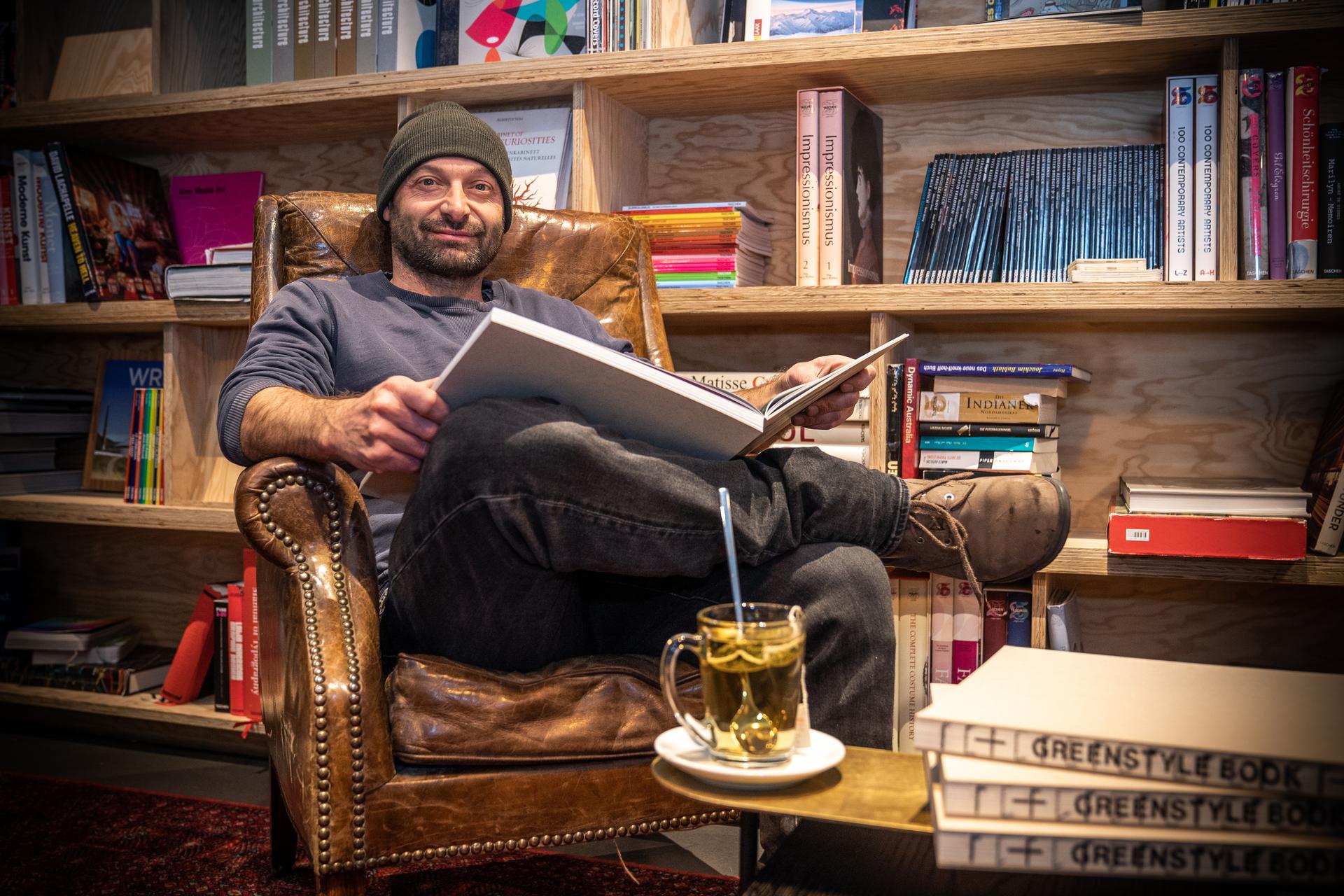
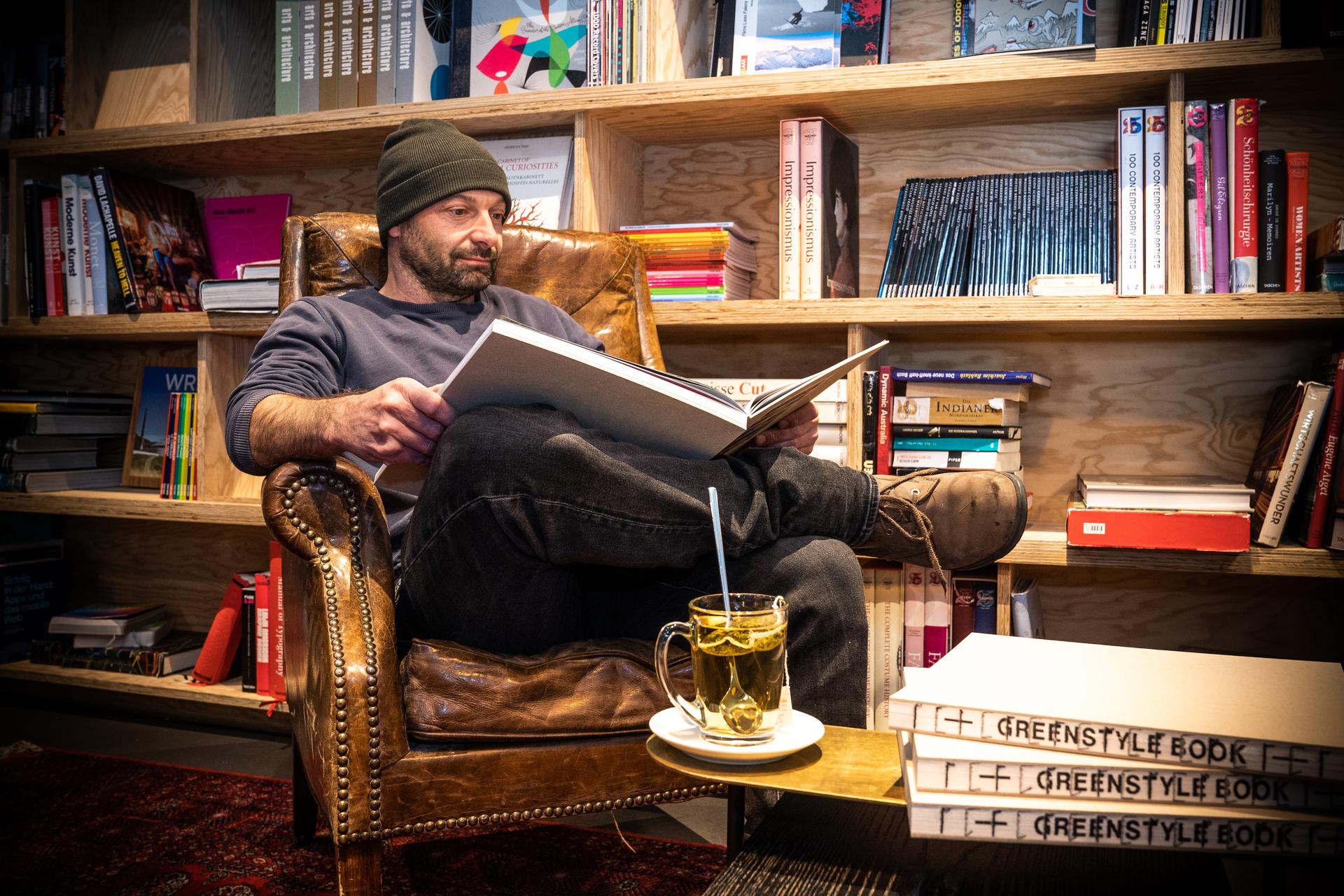
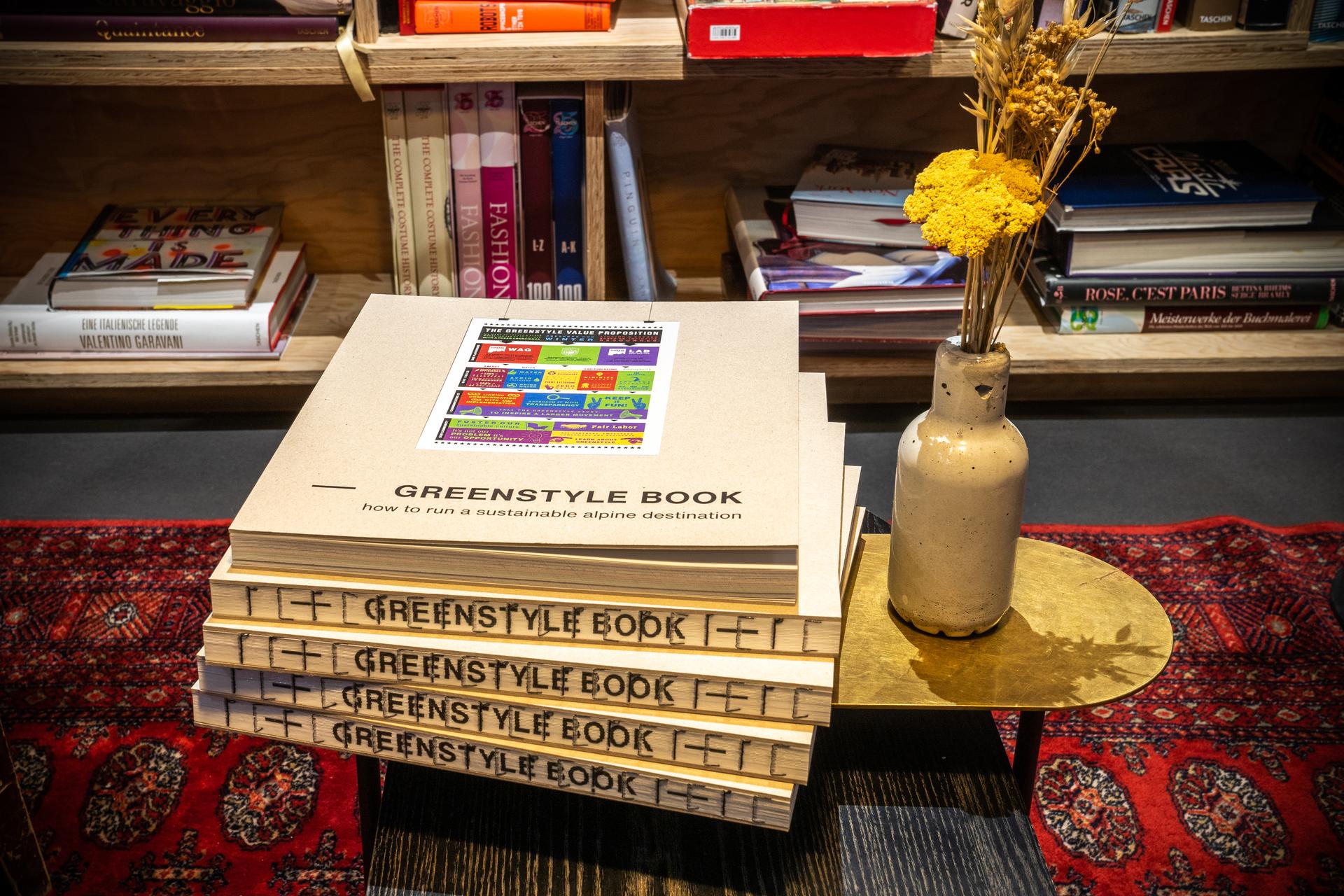
Greenstyle Book "How to run a sustainable alpine destination" – that's the title of the new book by the Weisse Arena Group. It summarizes projects, goals, and visions from the past 10 years and is intended to serve as a guide for greater sustainability. The book was initiated by Reto Fry, who, as the Weisse Arena Group's environmental officer, is responsible for the strategy and implementation of Greenstyle measures. He is committed to various issues to ensure that the company and the Flims Laax Falera destination become more sustainable step by step. The book was produced in collaboration with copywriter Tabea Ammann and graphic designer Roland Buob. In this interview, Reto Fry explains what the completion of the Greenstyle Book means to him.
How does it feel to finally hold the book in your hands?
It's very exciting. We put a lot of heart and soul into the project, and I'm glad that I can now share the Greenstyle Book with others. I'm very curious to see how the book will be received. But only the book is finished; the implementation in the mountains and valleys is far from complete. That's why I'm looking forward to getting back to work in the future and following up on all the words with more action. There are still numerous projects in the Flims Laax Falera destination and within the Weisse Arena Group that we need to tackle in the area of green style.
Why was the book published?
There are several reasons: We can look back on over 10 years of Greenstyle – this is always a good opportunity to take stock. We have been working for some time to transform Flims Laax Falera into a sustainable Alpine destination. From the perspective of the Weisse Arena Group, it has always been our ambition to play a pioneering role. We have learned a great deal in the process, and over time, Greenstyle has developed into a comprehensive sustainability concept. With this book, we want to share our experiences with as many people as possible so that we can achieve our goals and visions more easily. Many challenges, such as the energy transition and the preservation of biodiversity, can only be overcome by working together. The book is intended to motivate, inspire, create transparency, and show a viable path that will ultimately benefit us all. For this reason, the book is also a call to all of us to shift into high gear and become bolder and faster in our implementation.
Which is your favorite page in the book?
The double page 60/61 on the topic of solar power potential. On this page, we show how a fossil fuel-free energy transition is feasible without further endangering biodiversity. The sun provides much more energy than humanity consumes. We could cover the entire energy demand in the destination with solar energy on existing buildings alone. Solar power is therefore considered the key technology for the energy transition and is the most sustainable and ecological form of energy. Many other forms of energy have a higher footprint or are more expensive. I recommend reading the cited solar power potential study. To do so, simply scan the QR code on the page.
Which topics are particularly important and should be brought to the attention of a wider audience?
Energy is certainly one of the most important topics. We humans waste a great deal of energy, and there is enormous potential for savings. We have many losses that we could reduce, for example, through building renovation and efficiency improvements. Another topic is biodiversity. After all, the energy transition must not come at the expense of biodiversity. It is also important to draw attention to species loss, because we humans are not only dependent on an intact climate, but also on a functioning ecosystem. Ultimately, many things such as nutrition and health are based on this, and everything is connected.
Who should read this book?
The book is intended as a guide for anyone who wants to make a difference. It should primarily be read by employees, service partners, locals, second home owners, and guests. After all, we still have the greatest influence on our own doorstep. However, the book should also serve as inspiration for media professionals, students, and other destinations and businesses.
What are your hopes for the Greenstyle Book?
My greatest hope is that we can show that Greenstyle has become an important part of sustainable business. It's not about pointing fingers, but rather motivating people to work together to create a better world and have fun doing it. The book aims to show that we have the necessary knowledge and technologies to make things a little better every day. I hope that we will soon see many new solar power systems, more electric vehicles and bicycles, lots of wild bee-friendly gardens, and much more.